
Why the Dog’s Head Project is a Bad Deal for Current Residents of Austin
(Beyond the sped-up process, the bypassing of city commissions, environmental concerns, and displacement/gentrification possibilities)
Austin city staff recently released a draft of the financing plan for the Dog’s Head development in east Austin, near the airport (see Figures 1 & 2). The details outlined in this document allow us to estimate some of the costs associated with the project alongside the revenue that would be brought in from new development.
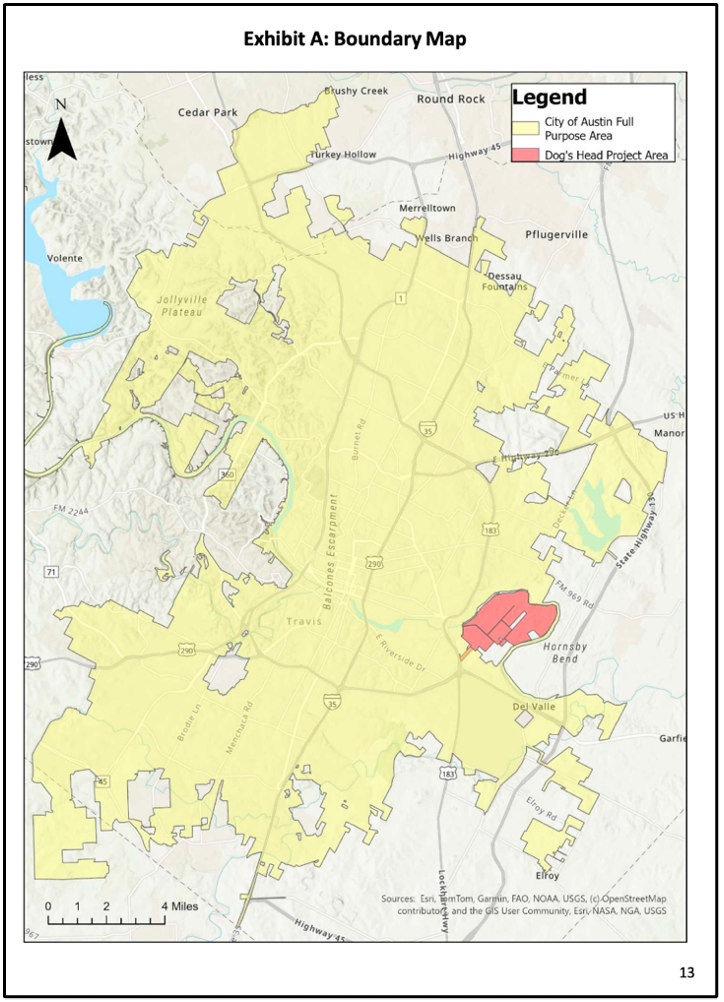
Figure 1: Cover of draft Preliminary Project and Financing Plan.
Figure 2. Map showing the “Dog’s Head” project, from Preliminary Project and Financing Plan.
According to my estimates, if the city signs on to the agreement, we will come out behind by about $237M over 35 years, or about $6.7M per year. This plan will strain the city budget and cost current residents. Because the development agreement means that the tax revenue available to the city’s general fund from the development does not cover the cost of services for new residents, current residents will have to bear the financial burden—in other words, our taxes will have to go up to pay for services for new residents. The development will not pay for itself for 37 years.
This is a bad deal for the people of Austin—even on its own terms.
The Deal (and how a “TIRZ” works)
The Dog’s Head site is a massive (2,600 acre) area, roughly the same size as all of central Austin from Lady Bird Lake to Hyde Park between MoPac and I35, surrounded on three sides by the Colorado River. Currently, most of the area is used for rock and gravel surface mining and has few roads or other infrastructure (utilities). A few residents also live on the outskirts of it.
Endeavor Real Estate Group acquired the land over time and now wants to begin transforming it into an area containing industrial, commercial, and residential developments, along with public open space along the river. Because of the lack of existing road and utility infrastructure, Endeavor has been working with city staff on creating a “Tax Increment Reinvestment Zone” (or TIRZ) to help pay for the needed infrastructure.
TIRZ explained
TIRZ deals are based on the fact that, as a piece of land is redeveloped by building new businesses or residences on it, the value of the property rises, thus bringing in increased tax revenue to the city. A TIRZ uses the new revenue to pay for the needed infrastructure for the project. Instead of the new tax revenue going into the city’s general fund budget, it is diverted into a special fund just for the TIRZ infrastructure. (Technically, the city borrows the money for the infrastructure up front, by issuing bonds, and then uses the TIRZ funds to pay back the loans.)
The proposed 35-year deal between the City of Austin and Endeavor has 75% of new taxes (property and sales tax) in the Dog’s Head going into the TIRZ for the first 20 years and 66% for the remaining 15 years. So, for the next 20 years, the city’s general fund (i.e. the budget) will receive only 25% of the revenue generated by new development and only 34% for the following 15 years (see Figure 3).
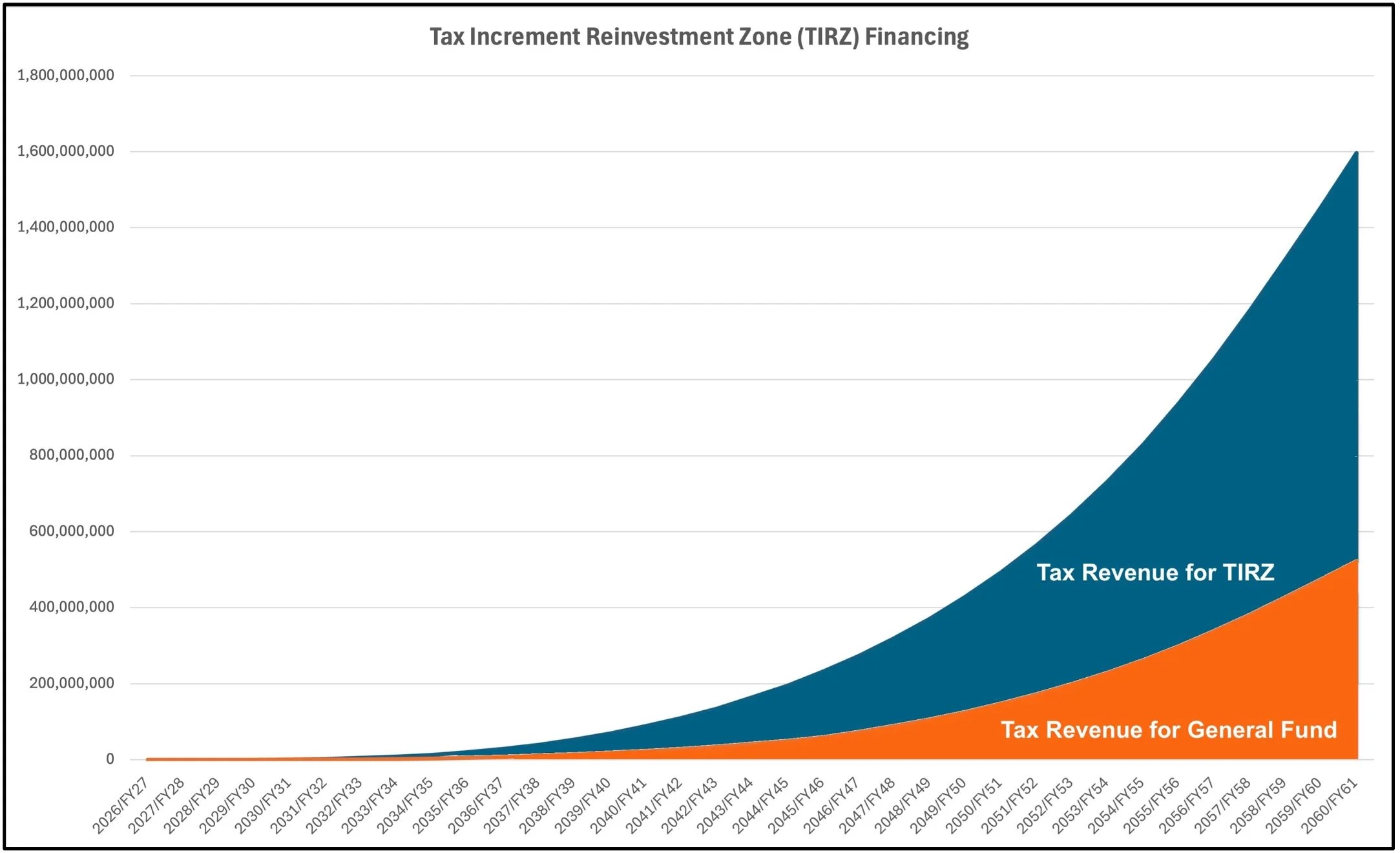
Figure 3. Chart showing a breakdown of new tax revenue going to the TIRZ infrastructure vs. to the general fund.
Meanwhile, new residents and businesses will be moving into the area and using services from the city, such as police, fire, EMS, libraries, parks, social services, etc. By 2047 the city and Endeavor project that nearly 25,000 new residents will be living in the Dog’s Head.
The City and Endeavor claim
This is a “generational economic opportunity” (Strategic Annexation and Development of Dog’s Head, City Manager’s Office presentation to Austin City Council of May 19, 2026, page 4);
The development will add $26B of value to the city’s taxable real estate (Dog’s Head—Project Update, City Manager’s Office presentation to Travis County Commissioners’ Court of July 14, 2026, page 3);
The development will generate $1.7B in new tax revenue (draft Preliminary Project and Financing Plan, July 23, 2026, Exhibit D).
These claims made by Endeavor and city staff overstate the benefits to the city because of the 75%/25% & 66%/34% terms of the TIRZ, and they are silent about new costs to the city of the nearly 25,000 new residents. They are misleading as to the real costs and benefits of the deal.
Calculating the Costs vs Revenue
Costs
To calculate the costs to the city budget associated with 25,000 new residents, I performed a quick back-of-envelope calculation. In 2025-2026 the City of Austin spent $1.6 billion on its $1.1 million people, which is approximately $1,455 per person:
$1,600,000,000 ÷ 1,100,000 people = $1,455 spent per person.
From this, we can calculate the approximate cost to the city of the new residents of the Dog’s Head development, based on the projections of the number of housing units built each year.
At the completion of the TIRZ agreement, in 2061, city staff projects that 12,395 housing units will be built, roughly half single-family homes and half in multi-family buildings (apartments or condos). According to the economic feasibility study included in the Preliminary Plan (Exhibit G), the average household in Austin consists of 2.0 people. Therefore, we can assume there will eventually be around 24,790 people living in Dog’s Head in 2061, when the agreement ends.
Since the City spends, on average, $1,455 per person, we can calculate the yearly and cumulative costs to city services of the new population of Dog’s Head. By the end of the tax rebate agreement in 2061, the city will have incurred an extra $758,840,700 in the costs of delivering services to the 24,790 residents of Dog’s Head (see Table 1).
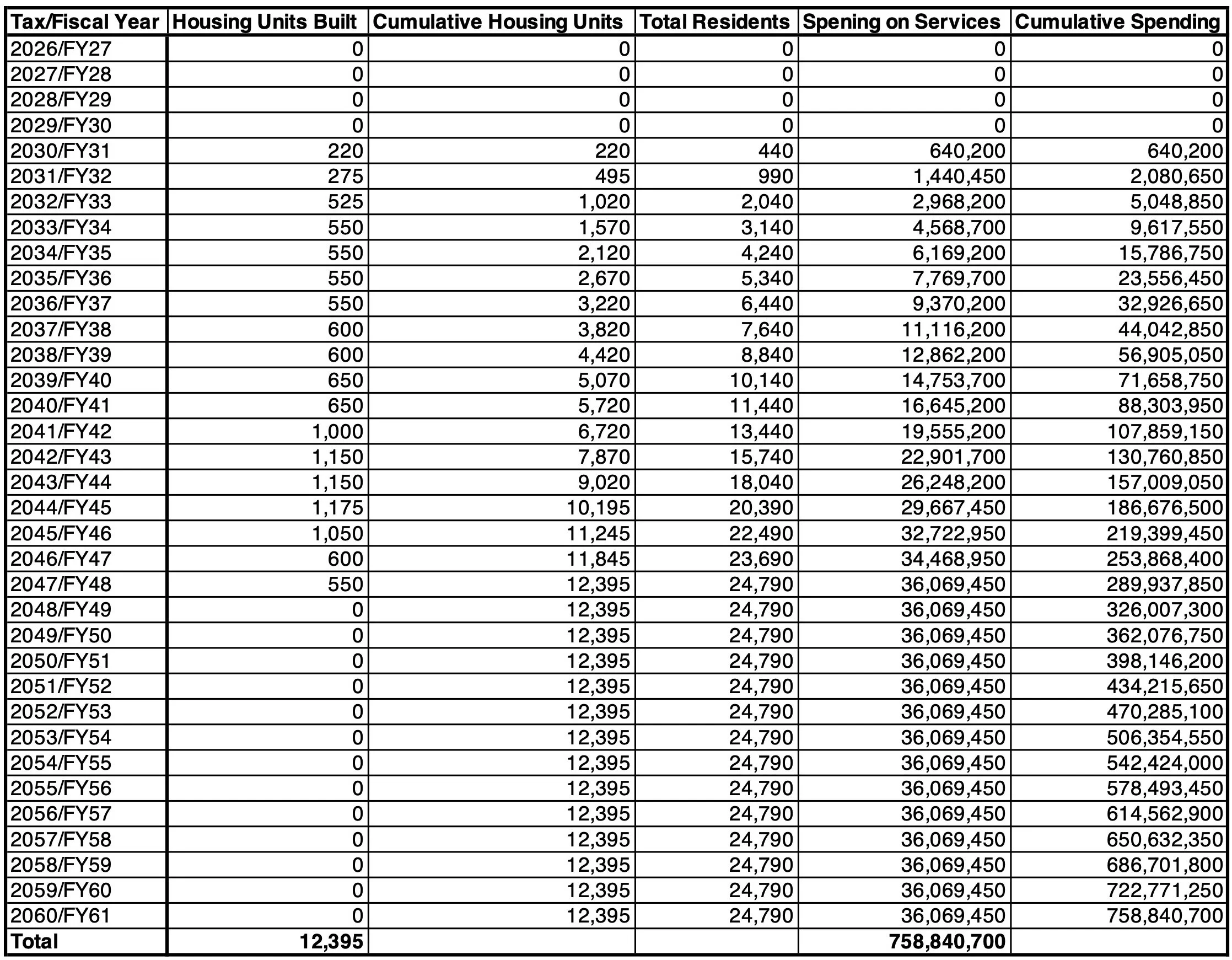
Table 1. Projected Housing Units, Population, and Spending, 2026-2061, based on draft Preliminary Project and Financing Plan, July 23, 2026, Exhibit D.
Revenue
On the other hand, the City will be receiving new revenue into the General Fund that will help pay for these added services, in the form of property and sales taxes in the Dog’s Head. Using the projected property and sales tax revenue from Exhibit D of the draft Preliminary Project and Financing Plan and the terms of the TIRZ, we can estimate the net total tax revenue available to the city’s general fund budget, year by year, which amounts to approximately $522M over the life of the agreement (see Table 2).
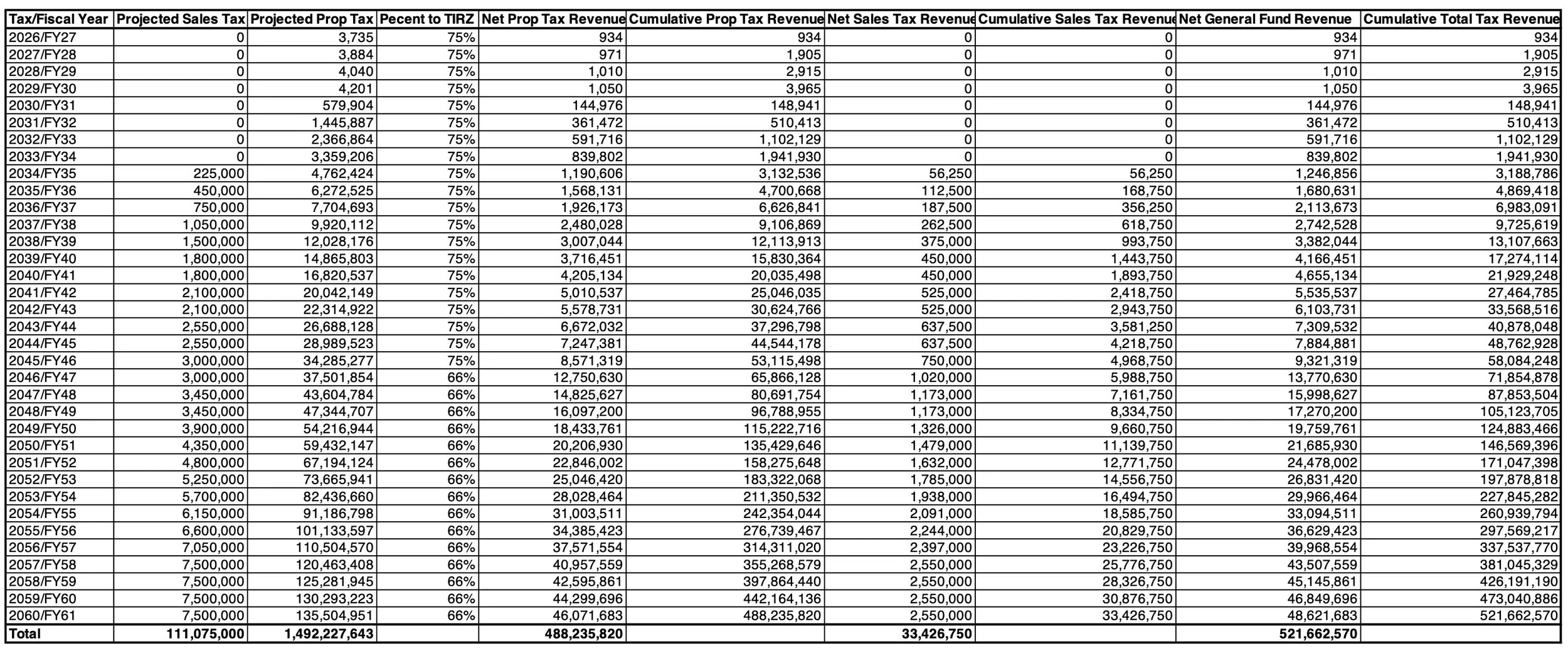
Table 2. Projected Sales and Property Tax Revenue to General Fund, 2026-2061. Based on draft Preliminary Project and Financing Plan, July 23, 2026, Exhibit D.
Costs vs Revenue
The services for 25,000 projected new residents will require roughly $759M, but, because of the terms of the TIRZ agreement, most of that new revenue will be used to pay for the infrastructure costs of the development itself, with only 25% going into the general fund for the first 20 years and only 34% for the remaining 15 years, netting $522M. This leaves a deficit of about $237M over 35 years or roughly $6.8M per year on average (see Tables 3 and 4 and Figure 4).

Table 3. Summary of costs vs general fund revenue of Dog’s Head TIRZ, 2027-2061.
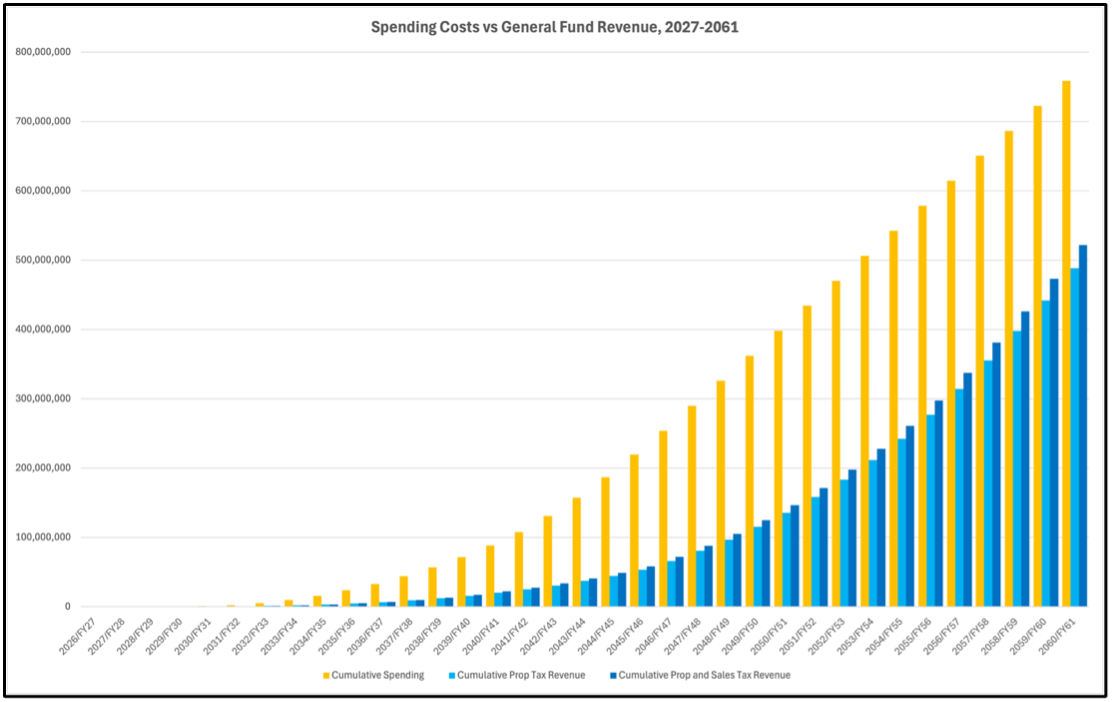
Figure 4. Summary of spending and general fund revenue, 2027-2061.
Impacts on city budget
For the first four years of the agreement, there will be minimal impact on the city budget, but by 2031, the costs of services for new residents will begin outstripping new revenue, by about $.5M. Yearly deficits grow from there and peak in 2046 at $23.4M.
Cumulative deficits peak in 2055, reaching $281M. It is not until 2056 that annual revenue generated from the Dog’s Head will begin to cover annual costs and make up for the accumulated deficits. By the end of the 35 years of the agreement, the development will have cost the city $237M more than it brought in (see Table 4 and Figures 5 & 6).
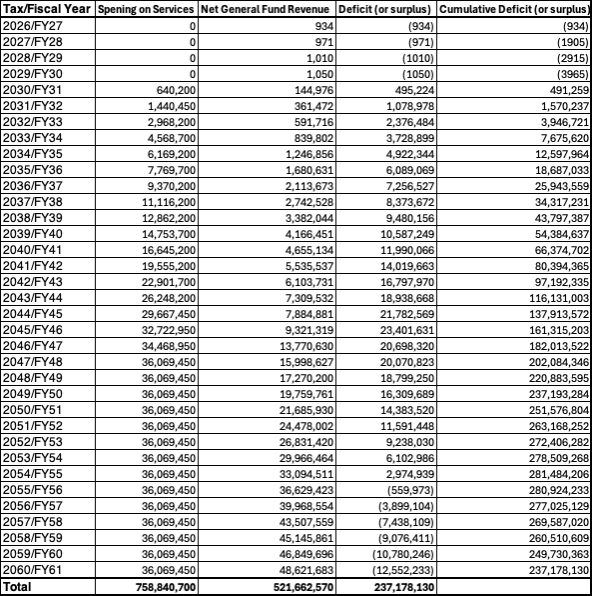
Table 4. Projected yearly and cumulative deficit (or surplus), 2027-2061.
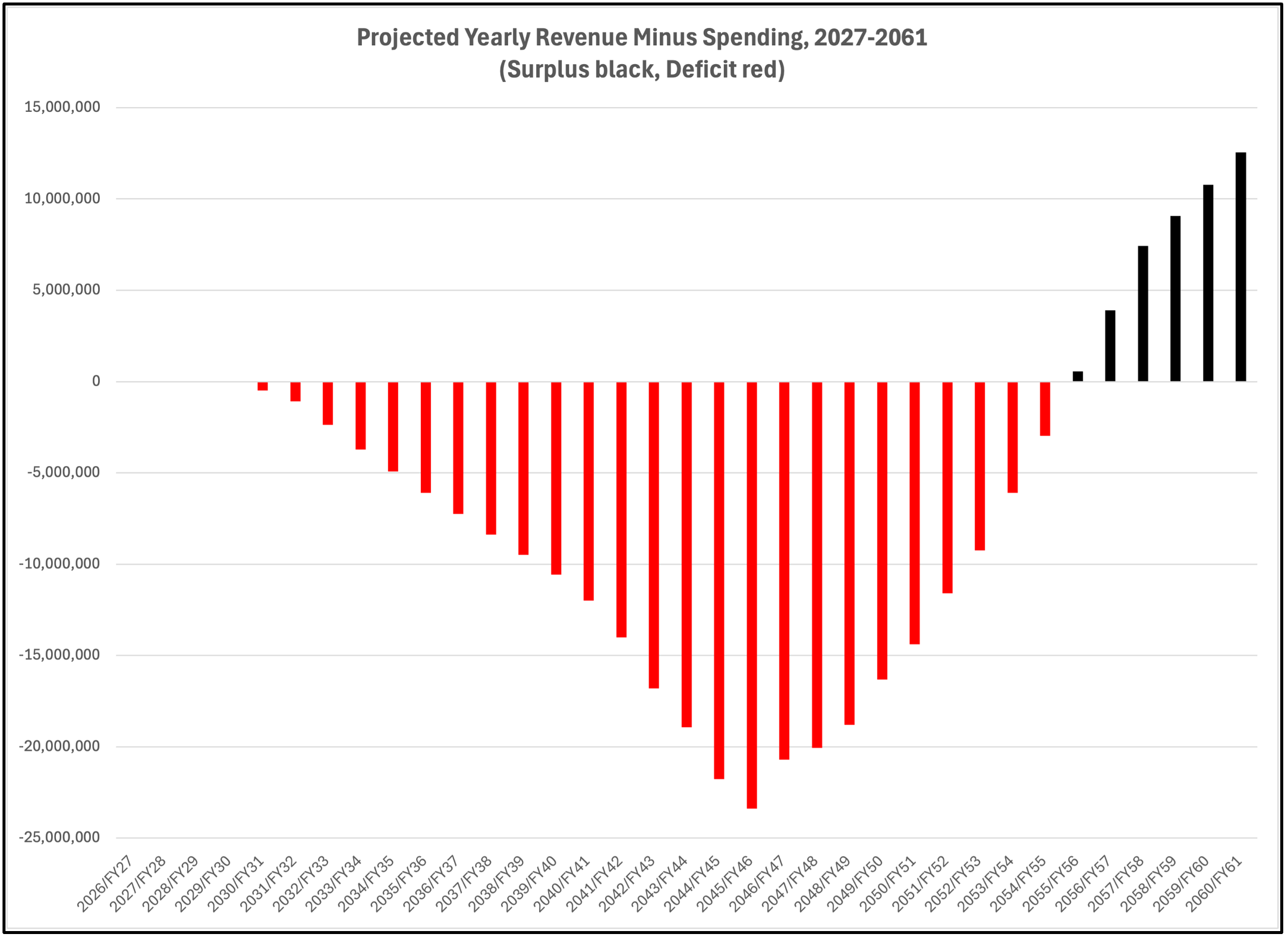
Figure 5. Projected yearly deficit and surplus from Dog’s Head, 2027-2061.
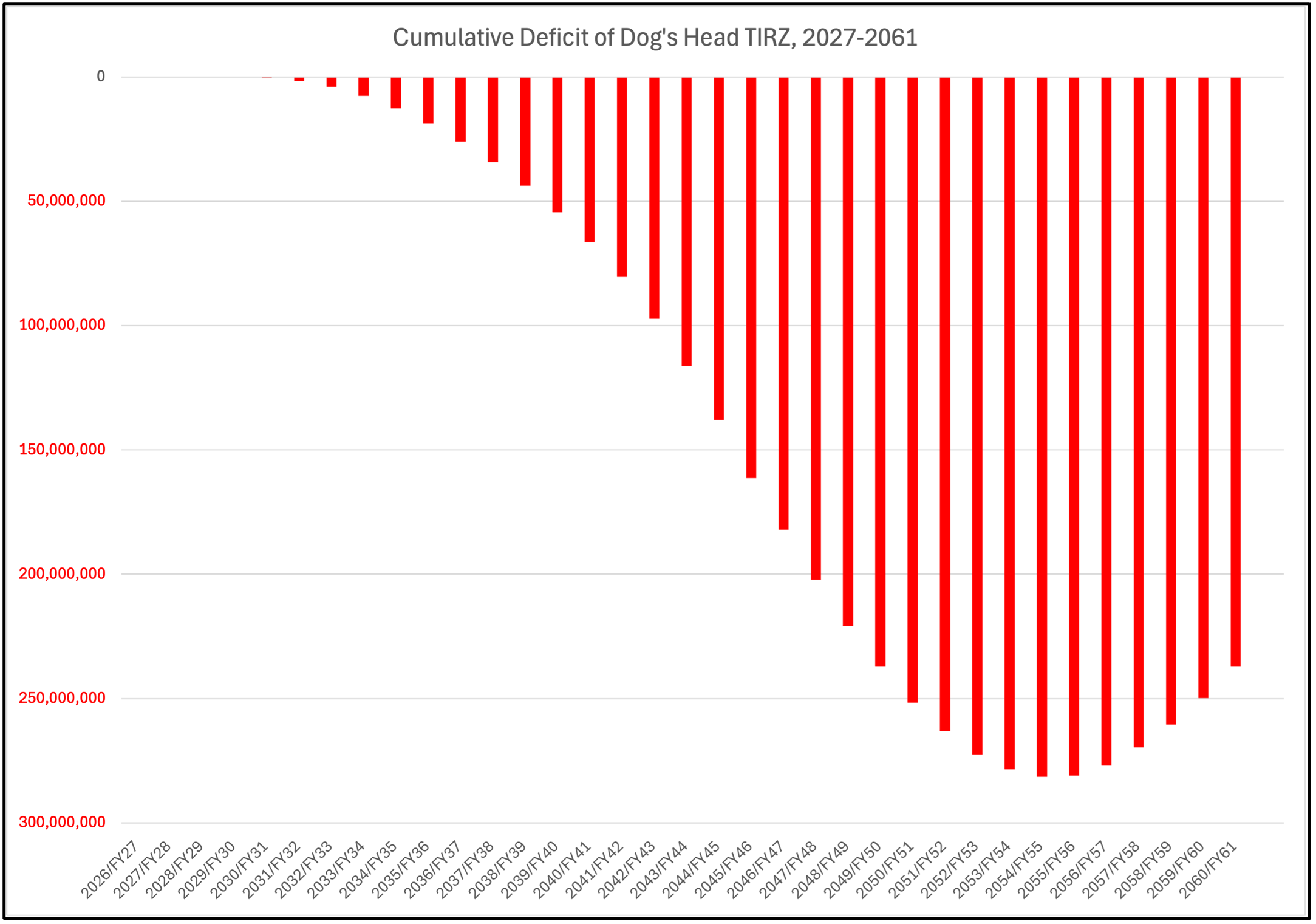
Figure 6. Projected cumulative deficit from Dog’s Head, 2027-2061.
Not until after the end of the TIRZ agreement, in 2063, after a couple of years of 100% of revenue going into the general fund, will the city begin to see an overall financial benefit from the Dog’s Head Development but not before it will have had serious negative impacts on the city budget.
Within the first ten years, the number of residents living in Dog’s Head will begin to strain the city’s budget, as the revenue generated would not be able to keep up with costs of providing services for them. Either taxes would have to be raised throughout the city, or existing services would have to be cut to extend essential services to Dog’s Head.
Politicians love TIRZ-type agreements because they appear revenue neutral—the cost of creating the new infrastructure is not coming out of existing revenue—but they fail to fully account for the new costs associated with thousands of new residents, costs that are borne by existing residents. TIRZ agreements use tax money to help fund infrastructure for new development (which traditionally had been borne by developers themselves), but the terms of the TIRZ mean that those developments often put strains on city budgets and end up costing existing residents, either in higher taxes or in fewer services.
The proposed TIRZ agreement for the Dog’s Head is a bad deal for the people of Austin. The terms of the deal mean that the Dog’s Head development wouldn’t pay for itself for more than 35 years. We would pay to make up the deficits created by new residents or suffer reduced services.
Caveats
We have to keep in mind that all of the figures related to Dog’s Head—housing units, population, property tax revenue, sales tax revenue—are projections. They are the products of collaborations between city staff and Endeavor and, probably, represent an optimistic scenario. We don’t know how reliable they are; we are working with their numbers.
On my side, I have used many assumptions, for example, how many residents there are per housing unit and that the average spending per resident is equal to the city’s most recent budget divided by the total population (approximately $1455).
Some people might object to that number, maintaining that it overestimates the costs of adding population—some services might need the same funding whether there are 1,100,000 people in the city or 1,125,000. Probably, there is not a 1-to-1 correspondence between the number of residents and how much the city spends on services.
However, even if we assume that services needed by new residents only cost the city half of the current average per-person spending ($728), the break-even point (the point at which more revenue would have been collected than spent on services for new residents) would not be until 2056. In other words, even at half the cost per person, the project still does not pay for itself for 30 years, until 2056 (see Table 5).

Table 5. Spending projections based on 50% of current per person spending, showing the break-even point of the project occurring in 2056.
Assuming $728 spent per person per year on city services rather than $1455 only shortens the break-even date by seven years, or 20% of the life of the TIRZ. This would still be a bad deal for current residents because in the intervening 30 years, those new residents will put a strain on the city budget without paying their fair share into the general fund.
Conclusion
A deal like the Dog’s Head, that relies on a lengthy TIRZ, is one that will cost current residents for decades, with potential benefits coming only nearly 40 years in the future, if ever.
Claims by city staff and the developer that this deal is once-in-a-generation opportunity and a boon to the city’s finances are misleading at best. Specifically, the assertion that the development will generate $1.7B in new tax revenue is technically true but obscures the reality of higher taxes and reduced services behind the veil of a “Tax Increment Reinvestment Zone,” which sounds impressive but also complicated. The claim is misleading and dishonest. In reality—based on their own optimistic numbers—the city’s general fund would only receive $522M, less than 1/3rd of what they are claiming.
Those who are pushing this deal either do not know how a TIRZ works or are not being honest with voters about the future tax increases and service cuts it will create.
Email me with comments or questions: rich@richforaustin.org