
The July 24 killing of Anthoneil Williams by APD officers and “Suicide by Cop”
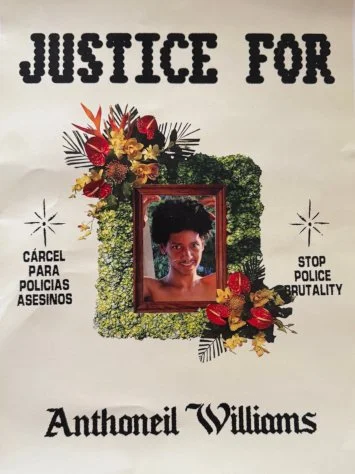
Many people in Austin, including me, were deeply upset by the shooting death of Anthoneil Williams, an unarmed Black boy, by three APD officers in the early morning of July 24. This is exactly the kind of incident that undermines trust among community members and dissuades people from calling for help when they need it.
The people of Austin deserve a swift, transparent, and just investigation into this tragic and unnecessary death of a young person of color. The people of Austin deserve accountability from our leadership, including meaningful reforms that help to prevent such tragedies from happening in the future, including independent police oversight that results in proper training, policies, and, when warranted, punishments.
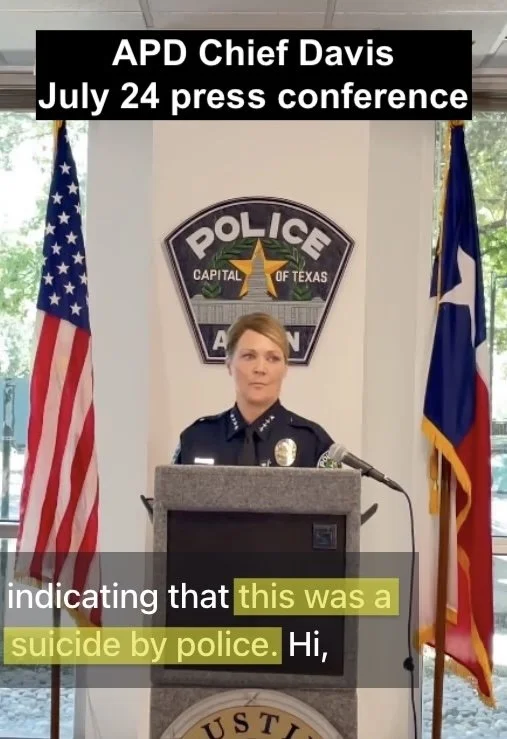
Screenshot of APD YouTube video.
In this case, “suicide by cop” is not an explanation of what happened or a justification of the actions of the officers. Instead, it is a symptom of a problem within the APD.
“Suicide by cop” is an admission by Chief Davis that a Black teenager could predict that he’d be killed by APD officers if they were to respond to a vague 911 call about a “very young” “kid” who possibly had a gun alone in a playground late at night, even if he only had a water bottle in his waistband.
Tragically, he was right. Based on released audio and video recordings, it is clear that from the 911 call, to the dispatch, to the officers on the scene, APD appears to have escalated the situation at every step, leading to a predictable outcome.
Evidence in the recordings of the 911 call, the police dispatch radio conversation, and the bodycam footage from one of the officers on the scene clearly shows that how the APD handled the situation from beginning to end was not in line with best practice. Serious reforms are need, from training protocols, to the organization of our public safety response mechanisms, to the structure of police oversight.
Analysis
“Suicide by police” is a dynamic that has been recognized in law enforcement circles for at least 40 years. Likewise, training protocols for anticipating and approaching such cases in ways that prevent the use of lethal force by officers has also been developed for decades.
One source of training and guidelines for “best practices” in such cases is the Police Executive Research Forum (PERF), recognized as the “’gold standard” for reducing the use of force by police departments. According to PERF’s Suicide by Cop: Protocol and Training Guide, the key to handling a potential “suicide by police” situation is deescalation.
Deescalation means that responding officers should not take actions that may appear threatening, such as pointing a weapon at the subject, advancing on the subject, or shouting orders, especially from multiple officers. Communication is paramount, and one officer should take the lead in communicating calmly with the subject. PERF emphasizes, “Do not bark orders. Make small requests, one at a time”:
For example, if the subject has his hands behind his back, do not yell “Show me your hands!” That can raise the subject’s anxiety level, which is counter-productive.
Instead, make a request rather than issuing an order.
Say, “Can you do me a favor and show me your hands? I want to make sure you don’t have a weapon, so we can take some time and talk. I want to talk to you about what’s going on with you today, but first I need to know you’re unarmed.”
What we see in the bodycam footage is exactly the opposite: from the moment officers arrive on the scene, they advanced towards Anthoneil Williams, barking orders from multiple directions. Instead of advancing on a subject, PERF recommends that officers maintain a safe distance and take cover.
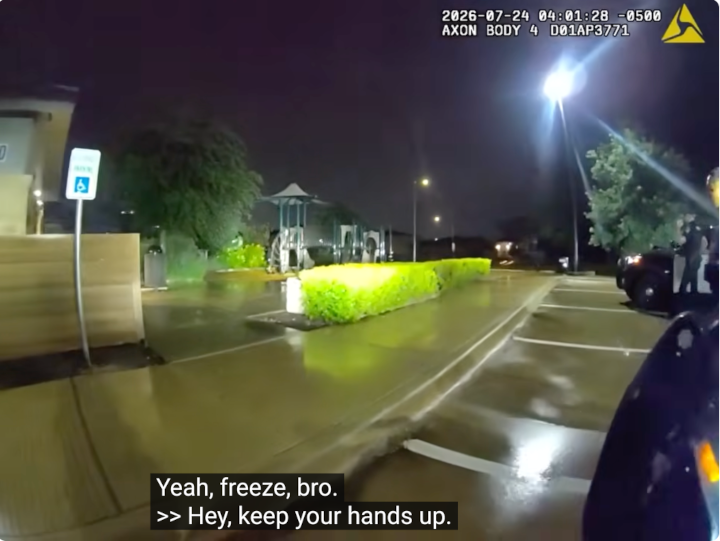
These are the first words uttered by officers—more than one at a time—on the scene, just seconds after arriving. Screenshot of bodycam footage.
It’s important to keep in mind the context here: it is 4 am, they are in a park, there are no members of the public present. Walking towards Anthoneil Williams escalated the situation and put officers in more potential danger by forcing a confrontation.
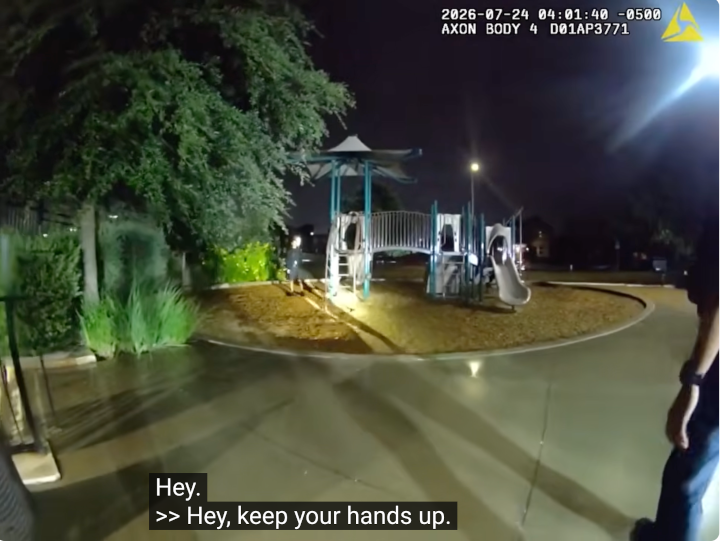
Officers advancing on Anthoneil Williams and barking orders. Screenshot of bodycam footage.
The bodycam footage points to the need for a change in training and culture in the APD. Officers should be taught and directed to take a non-confrontational approach and to deescalate, especially now that many of the calls they go on involve mental health issues.
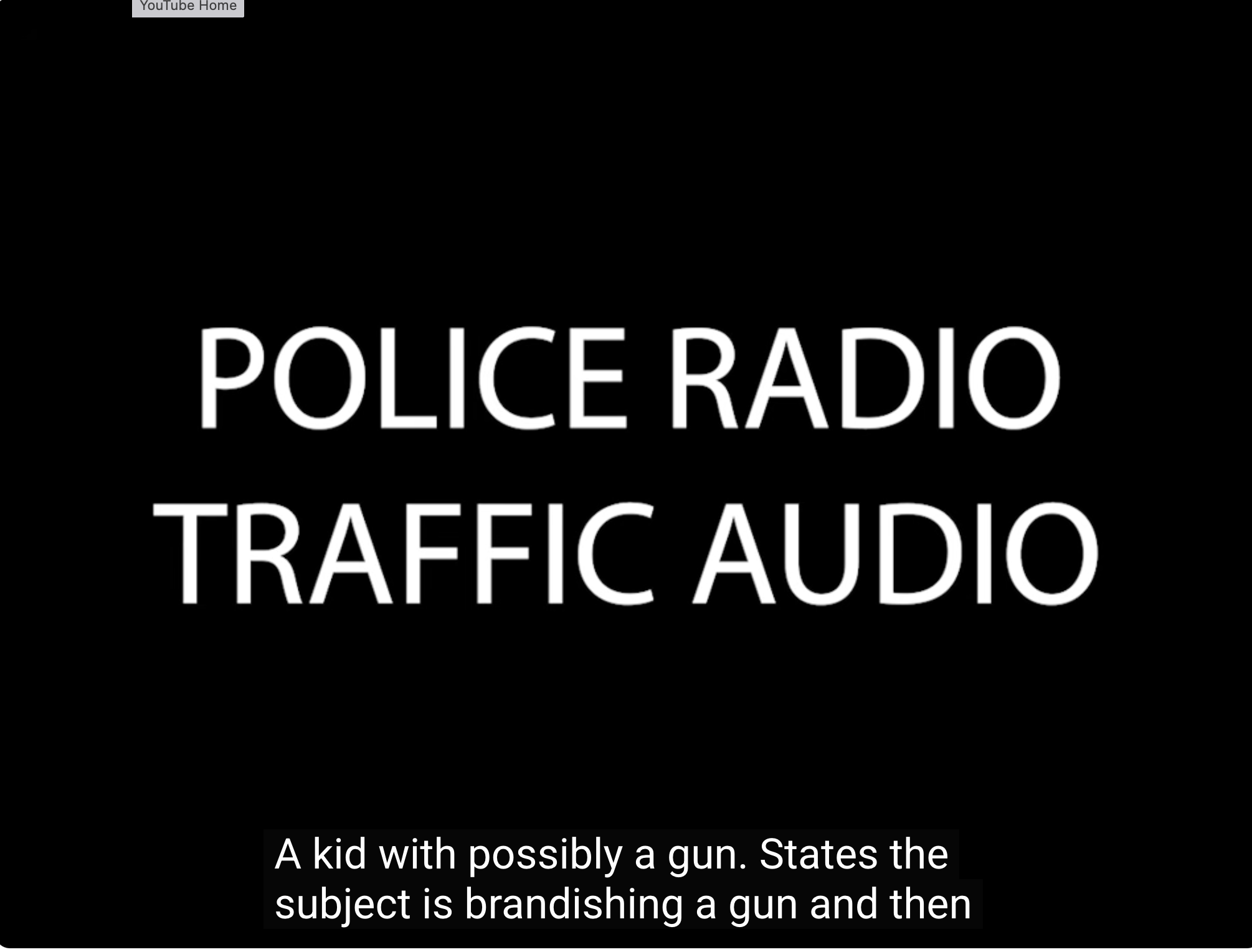
However, the dangerous—and ultimately fatal—dynamic that we see in the video had already begun to be put into place as early as the 911 call. On the audio recording of the call, the operator prompts the caller, who we now know was Anthoneil Williams himself, in a way that led him to revise his initial description of the subject from a “very young” “kid” who may or may not have gun, to a “teenager” “brandishing” a firearm. This prompting by the operator needlessly escalated the case, especially since it is clear that the caller is in some kind of distress.
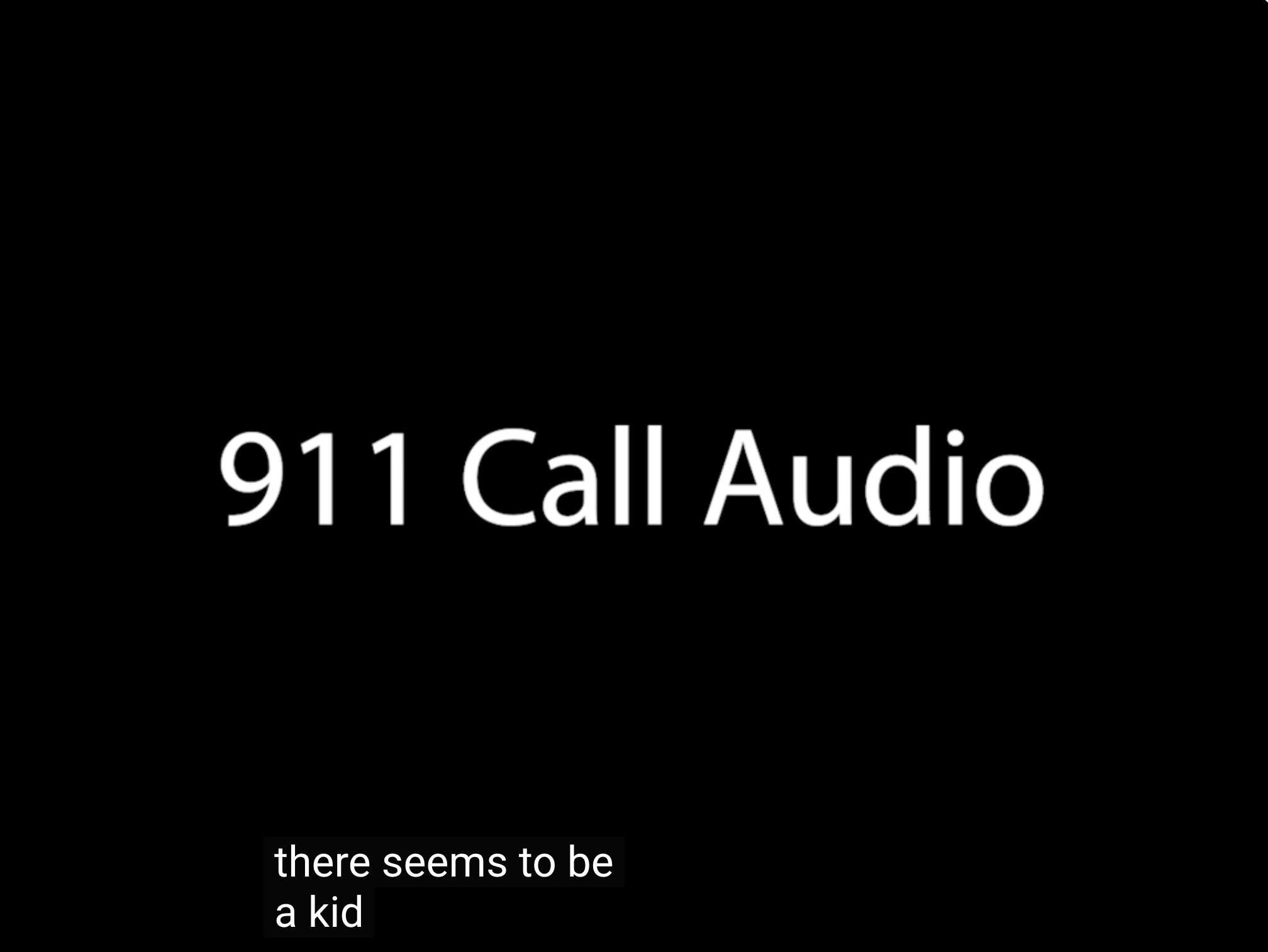
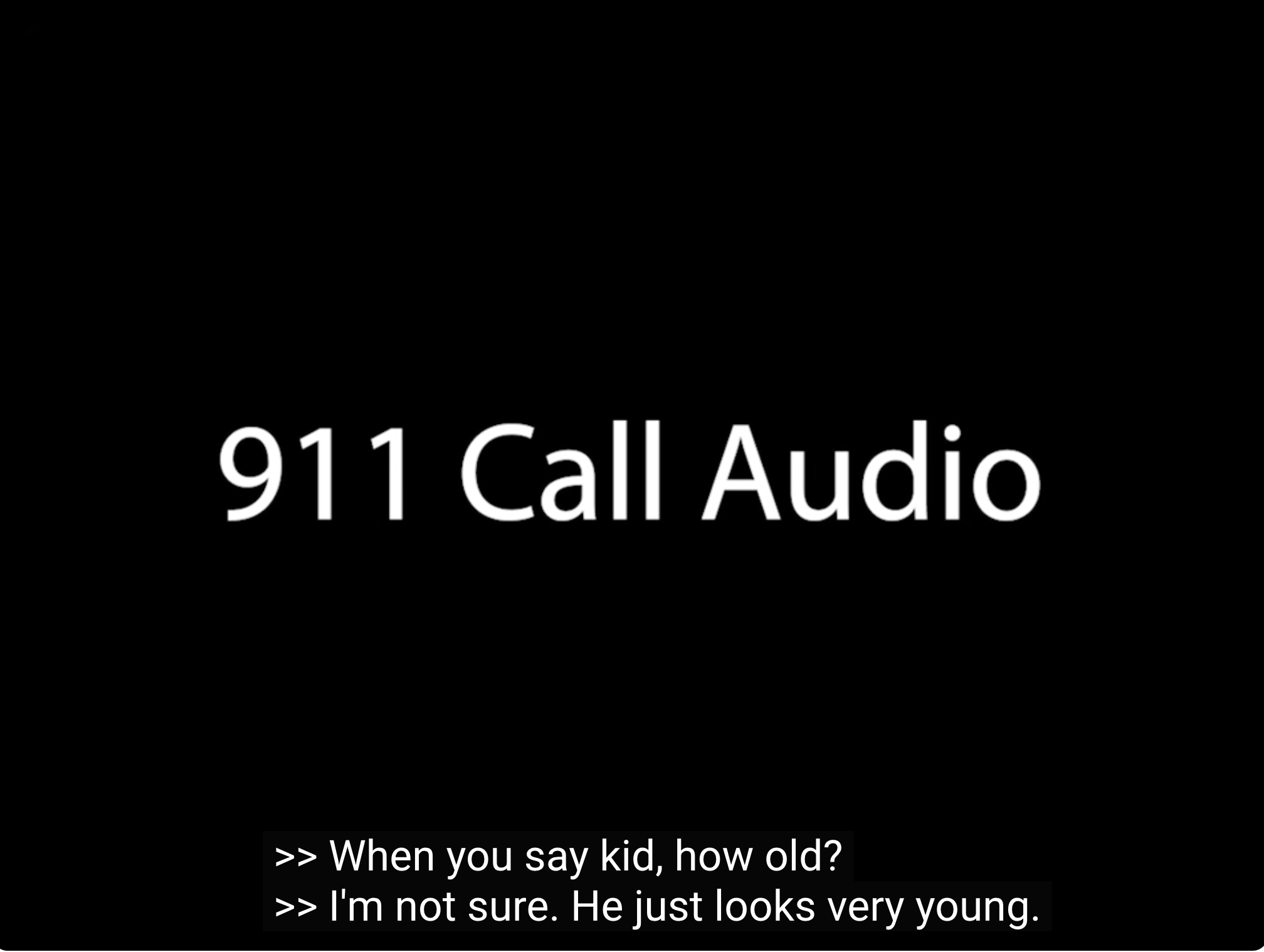
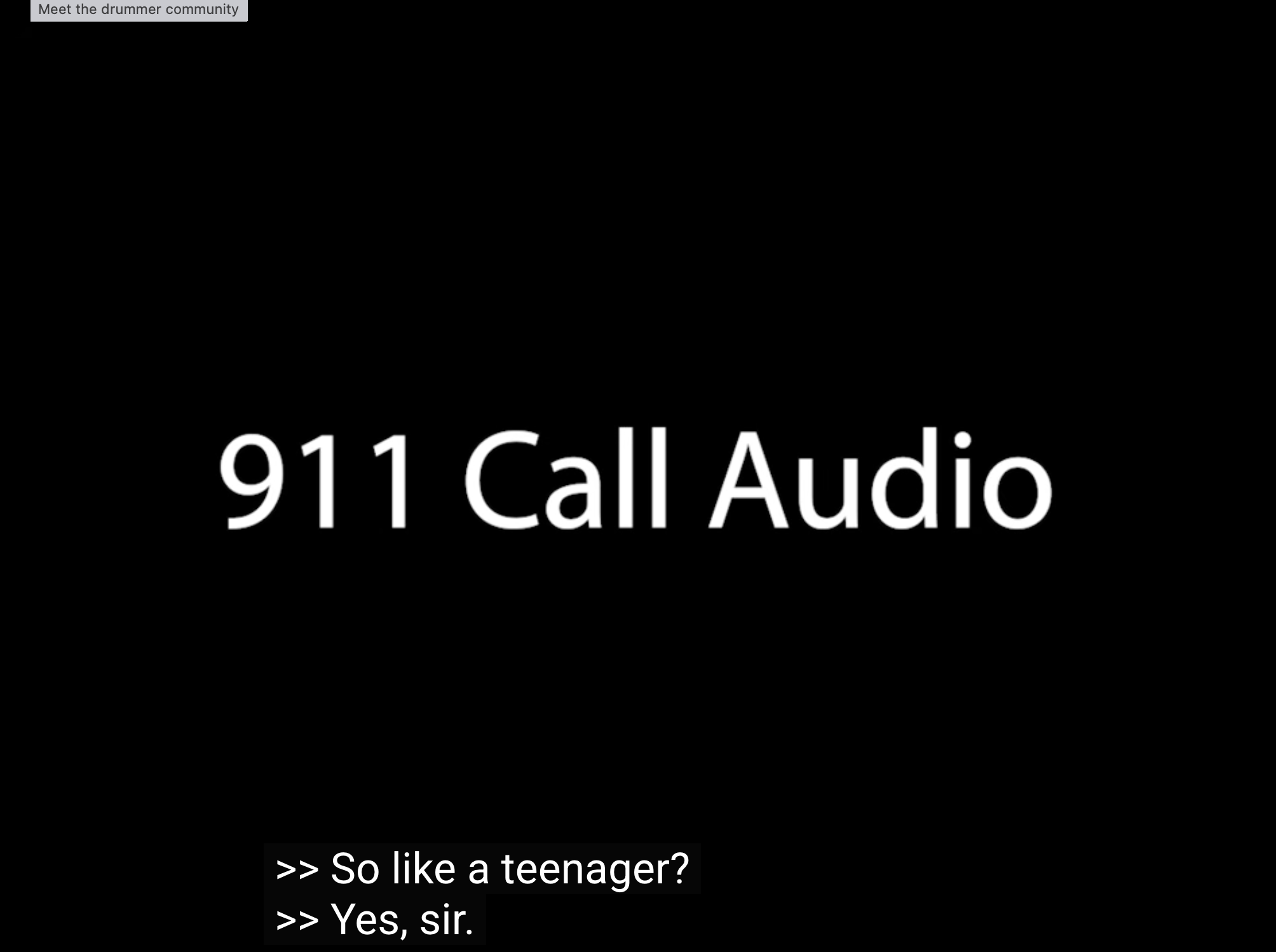
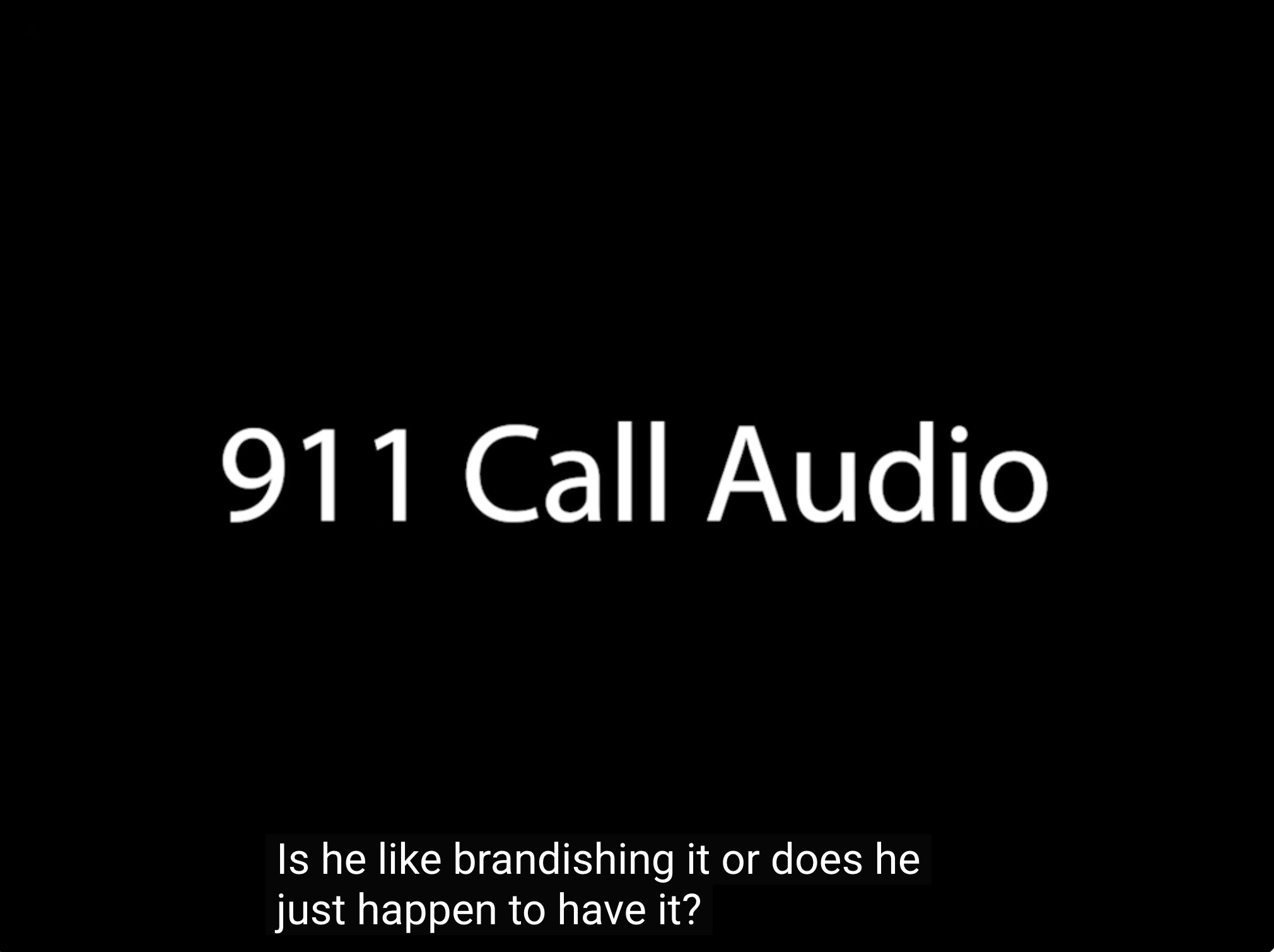
Screenshots of APD YouTube channel. Click on image to enlarge.
The 911 recording points to the need to move the 911 call center out of the police department and into a civilian department of the city so that operators are trained properly to listen to callers specifically for signs of distress and to not use leading questions that may create a more dangerous situation than already exists. 911 should be administratively separate from the police department.
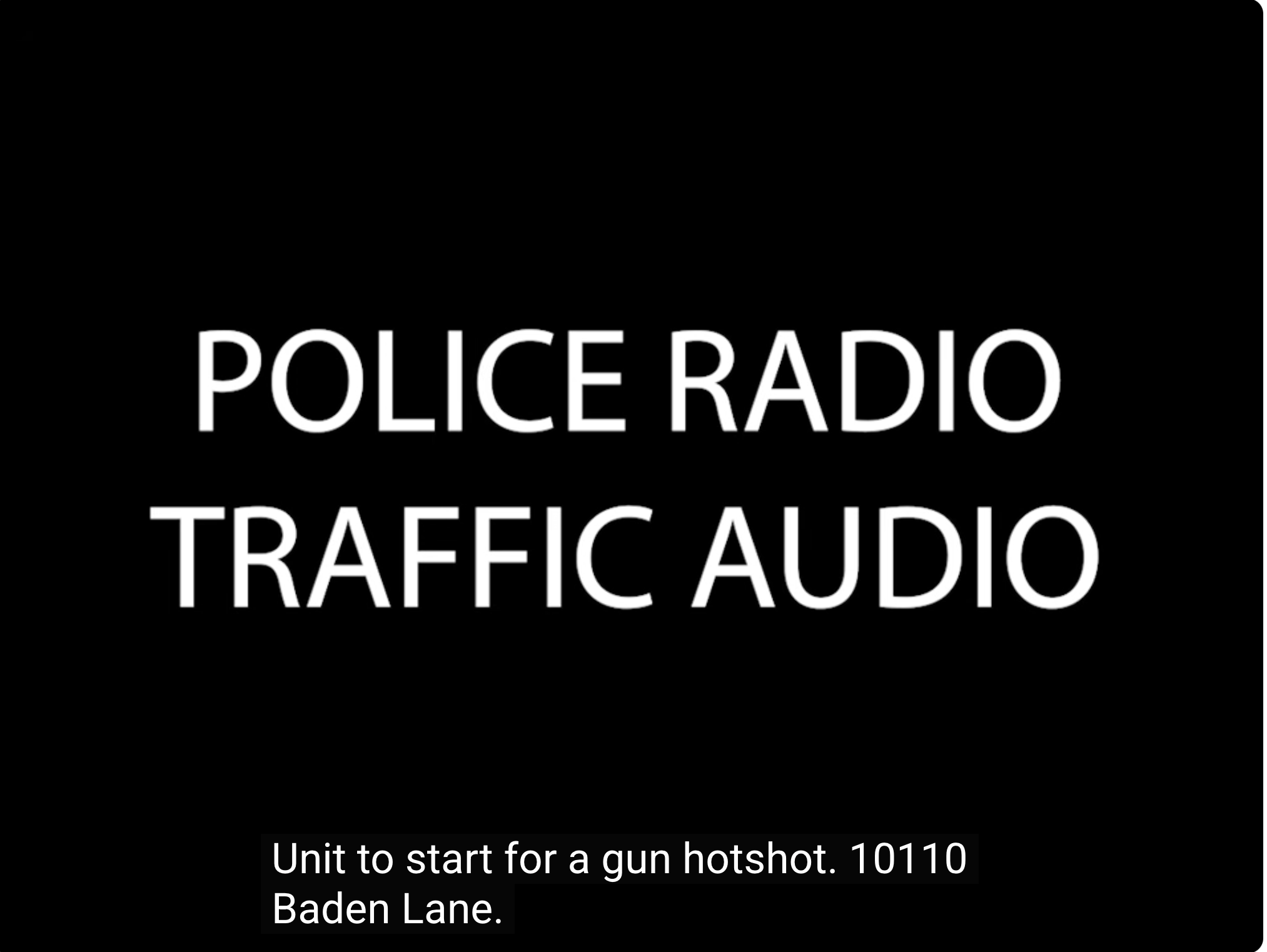
The next moment of escalation comes in the dispatch call, where the incident has been classified as a “hotshot” and where the dispatcher reports that “the subject is brandishing the gun”. According to an APD document from 2011, “Hotshots” are “Incidents which are in progress and are an immediate threat to life and/or public safety (i.e. shootings, stabbings, rapes, riots).” I question whether a “very young” “kid” “alone” in a playground who has an unidentified object in his hands belongs in the same category as a riot; yet, how the 911 was handled clearly resulted in the officers viewing the situation as much more dangerous than it was.
In addition to reforms in training for both officers and 911 operators, and to moving the 911 call center out of the police department, we need more robust and independent civilian oversight of APD. Giving investigative powers to the Office of Police Oversight and having it report directly to City Council, as the City Auditor does, rather than reporting to the APD chain of command would be a meaningful step towards accountability and would give us a better foundation for preventing tragic events, such as the shooting death of an unarmed Black teen by APD officers.
Email me with comments or questions: rich@richforaustin.org